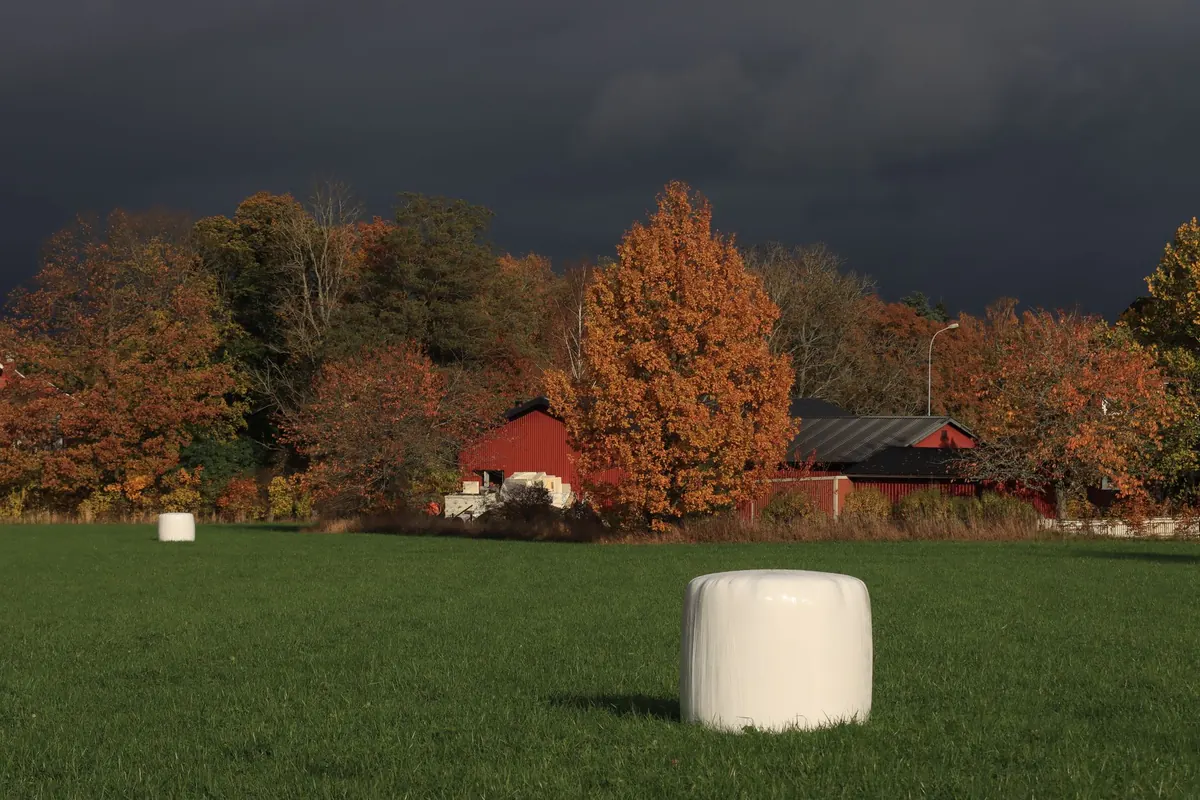
The first real autumn storm rarely arrives politely. It comes in overnight, sideways, drumming on the tiles and finding the one gutter you meant to clear in September. By morning there's a brown stain spreading across the barn wall and a puddle standing exactly where you park the tractor. Almost none of that damage is dramatic — it's the accumulation of small failures that a few hours of work in dry weather would have prevented.
The good news is that a farmhouse tells you what it needs if you walk around it slowly and look. Below is the order we work through here each year, roughly from the top of the building downwards, because water always follows gravity and gravity always wins.
Start With the Roof, Because Water Finds Every Weak Point
You don't need to climb. A pair of binoculars and a slow circuit of the house will show you most of what matters: slipped tiles, cracked pantiles, lifted ridge pieces, and the tell-tale dark line where flashing has pulled away from the chimney. Pay particular attention to junctions — around the chimney stack, dormer windows, vent pipes and anywhere an extension roof meets a wall. Straight runs of tiles are usually fine; it's the seams that open.
Moss deserves more respect than it gets. A thick cushion of it behind a chimney or along a valley can hold rainwater long enough for it to work under the tiles, and in a freeze it lifts them. Scraping it back is fiddly but cheap. So is keeping a small stack of matching spare tiles in the barn, because the tile you need the day after a storm is never the one you can buy locally.
Then go up into the loft with a torch during the first heavy rain of the season. Look at the underside of the roof slope and the rafters for damp patches, dark tide marks or daylight. A single drip caught early is a slipped tile; one caught in December is a soaked ceiling and a joist that needs replacing.
If the roof needs real work, get someone qualified to do it. Ladders, wet tiles and old farmhouses are a poor combination, and a fall costs far more than any repair.
Gutters and Downpipes: The Quiet Failure Points
Most autumn water damage in rural houses doesn't come through the roof — it comes off it. A gutter that overflows sends a curtain of water down the wall, into the mortar joints and down to the footings, where it sits. The checks are simple and repetitive, but they are the ones that pay.
- Clear the gutters after the first leaf fall, then again in late autumn. A handful of wet leaves at an outlet is enough to back up an entire run.
- Check the fall. Water should move steadily toward the downpipe. Standing water after rain means a sagging bracket or a settled run — lift and re-fix rather than waiting for the weight of a full gutter to pull it off the wall.
- Look at every joint and bracket. Loose brackets, split seams and perished seals are what fail in a gale, not the gutter itself.
- Follow each downpipe to the ground. This is where the real damage starts. If a downpipe ends flat against the wall, the water goes into the foundation. Fit a shoe or a short extension so it discharges at least a metre away, onto stone or into a gully.
- Test it. Run a hose into the top of each run for five minutes and watch where the water actually goes. It's often not where you assumed.
While you're up there, check the gutters on the barn and any lean-to. Outbuilding gutters are the ones nobody remembers, and they're the ones that rot the bottom of a timber wall.
Drainage: Where the Water Goes Once It Leaves the Roof
Old farmhouses were often built with the ground level rising gently against the walls over the years — a bit of gravel here, a raised path there. The result is that the base of the wall, which should be exposed and able to dry, now sits below the soil line. Dig out a spade's width along the walls so the stone or plinth is visible and the ground falls away from the building. It's an afternoon's work and it changes how a cellar behaves.
Next, walk the ditches, culverts and gratings before the wet season rather than during it. Clear leaves and silt from gratings, check that culvert mouths are open, and make sure soakaway and well covers are intact. In a gravel or earth courtyard, note where puddles form after rain — those low spots are where water will stand for weeks and eventually find a crack.
Inside, check any cellar drain or sump for silt and test it with a bucket of water. Clear the channel at the bottom of a cellar door. If your house has a history of water in the cellar, move stored tools and anything perishable up onto pallets before the rain starts, not after.
Outbuildings, Barns and Everything the Wind Can Carry
An outbuilding is a sail with a roof on it. Barn doors that have swollen and won't latch, ridge sheets held by two screws, a stack of empty feed bins against a wall — all of it becomes a problem in a gust of the kind that arrives a few times each autumn.
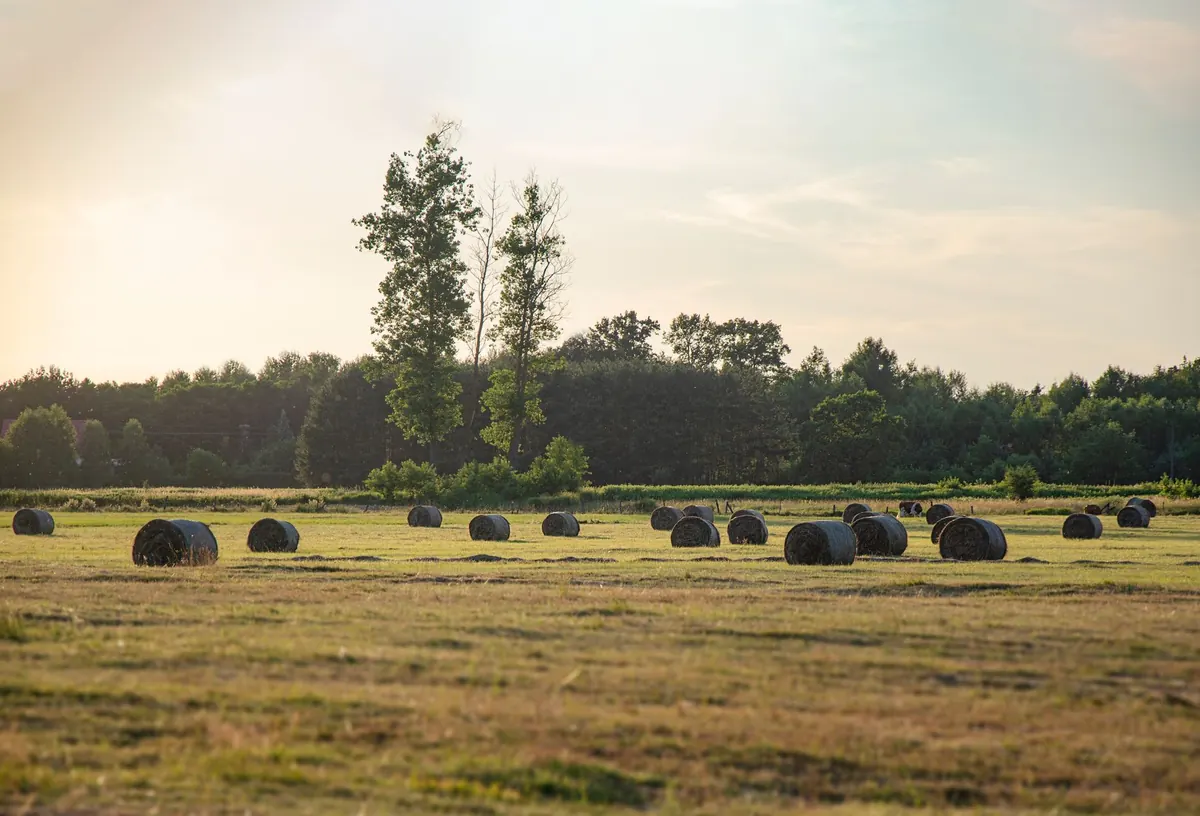
Check the shed and barn roofs for slipped corrugated sheets and loose ridge caps, and re-fix anything that moves when you push it. Fit proper hooks or latches so doors can be held open or shut rather than banging themselves loose. Store hay and straw on pallets, clear of the floor and away from the walls, and check the bales you already have for damp and heat — a warm patch in a stack is worth investigating.
Then do the unglamorous round: stack or tie down plastic sheeting, empty barrels, wheelbarrows and roofing sheets; park trailers where they won't catch the wind; check that animal shelters are dry, draught-free at floor level but ventilated above. Livestock handle cold well and wet cold badly.
Windows, Shutters and the Windward Side
Shutters earn their keep in autumn. Check hinges and latches on every pair and replace loose screws now — a shutter torn off in a gale does real damage to the wall it hits. When a strong wind is forecast, close the shutters on the exposed side and latch them properly.
Check putty around panes and re-glaze any cracked glass before the first hard frost. If doors swell and stick in wet weather, plane them in dry conditions rather than forcing them; the same door will shrink again in spring. And know where your stopcock and fuse board are, in the dark, without a torch.
Water is patient. It doesn't need a big opening — just a small one, and time.
The Weekend Before the First Real Storm
Leave one clear half-day for this and work in the order water travels: roof, gutters, downpipes, ground, outbuildings.
- Walk the perimeter with binoculars and note every defect on paper, not in your head.
- Clear gutters and gratings; test each downpipe with a hose and extend the outlets away from the walls.
- Dig out the base of the walls and check that ground falls away from the building.
- Fix or tie down anything loose in the yard; latch doors and shutters.
- Charge torches and power banks, and check you have spare batteries and a working radio.
- Take dated photographs of the buildings, roofs and yard — useful if you ever need to make a claim. Check your policy wording and, if anything is unclear, ask your insurer or a qualified adviser rather than guessing.
Then, when the first storm does arrive, you can stand at the kitchen window with a cup of something hot and listen to it, instead of pulling on boots at midnight to find out where the water is coming in.
Photo: Efrem Efre / Pexels