Mist on a millpond is easy to treat as scenery. The old wheel, the stone weir, the slow water, the white haze hanging over it — it looks like a postcard. But that haze is also a local weather instrument. It tells you what the air is doing right there, at the water’s edge, in the hours before the wider forecast catches up. Read it carefully and a millpond can give you a useful hint about the next 24 hours: whether the night will turn cold and clear, whether moisture is building, or whether a change is already on the way.
How Mist Forms Over Slow Water
Mist is cloud at ground level. It forms when moist air cools to the point where it can no longer hold all its water vapour, and that vapour condenses into tiny droplets. Over a millpond, two things make this more likely than over a dry field: the water itself supplies moisture, and the slow, sheltered water often holds a different temperature from the surrounding land.
A pond has thermal inertia. It warms and cools more slowly than grass, stone or bare soil. On a clear, calm evening, the field beside the pond may lose heat quickly, while the water stays comparatively mild. Air just above that water picks up moisture. As the night goes on and the air cools, the moisture condenses. You see it first as a thin film over the surface, then as patches, then as a bank that hides the far bank.
The pond’s own microclimate
Millponds are especially good at this because they are often shallow, sheltered and slow-moving. A weir or a millrace adds a little spray and turbulence, putting more moisture into the air immediately downstream. Old walls and trees cut the wind, so the moist air sits rather than being mixed away. That is why one pond can be shrouded while a field a hundred yards uphill is clear. The mist is not random. It is the visible result of local cooling, local moisture and local shelter.
Steam fog and radiation fog
There are two common kinds of mist to watch for. Radiation fog forms on clear, calm nights as the ground and the air above it cool. It tends to be shallow at first and deepens toward dawn. Steam fog — sometimes called sea smoke when it happens over the sea — forms when very cold air moves over relatively warm water. It looks like smoke curling off the surface. Over a millpond, steam fog usually means a sharp, cold air mass has arrived. It often signals a clear, hard frost rather than rain.
Timing Tells You What the Day Will Do
The hour when mist appears matters as much as the mist itself. A mist that forms in the last hour or two before dawn, then begins to thin as the sun rises, is usually part of a settled, clear night. The air has cooled enough to condense, but there is no great mass of cloud or wind behind it. Expect a bright morning, even if the first hour is grey and damp.
Mist that starts forming at dusk is a different message. The air is cooling quickly, and the pond is putting moisture into it early. That often points to a cold night ahead, with dew heavy on the grass and frost possible in low, sheltered spots. If you have tender plants near the pond, this is the evening to cover them or move them under shelter.
Mist that lingers well after sunrise, or thickens instead of thinning, suggests that moisture is not being shifted. The air may be humid and stable, or a change may be approaching. If the far bank stays hidden until mid-morning and the mist seems to be sinking rather than lifting, keep an eye on the sky. Cloud, drizzle or rain within the next 24 hours becomes more plausible.
Watch the Shape, Height and Drift
Once you have noticed the mist, look at how it behaves. A few details are more useful than a general impression of “foggy”.
- A thin ribbon at the surface. The mist barely rises above the water. This usually means little wind and a shallow layer of cool air. It often clears quickly after sunrise and points to a settled day.
- A thick bank that hides the far bank. Moisture is plentiful and the cool layer is deep. If it persists, expect a damp, grey morning and possibly a change in the weather.
- Mist lifting into low cloud. The mist does not disappear; it rises and flattens into a grey sheet. That can be an early sign of drizzle or steady rain later in the day.
- Mist drifting across the pond. A light breeze is moving the moist air. Note the direction. If the drift comes from a wet meadow, a stream or a wooded valley, that air is carrying extra moisture with it.
- Smoke-like plumes curling off the water. This is steam fog. It usually means very cold air over relatively mild water. Expect a sharp, clear day and a cold night to follow.
The height of the mist is a rough guide to how deep the cool, moist layer is. Shallow mist is often a overnight effect that will burn off. Deep mist that reaches the tops of the reeds and the mill wall has more moisture to work with. Drift tells you where that moisture is coming from, and whether the air is still or beginning to move.
Clearing Mist, Settling Mist: Two Different Forecasts
A mist that clears is a mist that is being dispersed. The sun warms the ground, the air mixes, and the droplets evaporate. Watch for the edges shrinking first, blue sky appearing above the mill roof, and spider webs drying on the fence. Smoke from a chimney should begin to rise rather than flatten. These are signs of a stable morning and, often, a fair day ahead.
A mist that settles is doing the opposite. It thickens, lowers and becomes more uniform. The far bank stays hidden, the air feels raw rather than fresh, and smoke hangs in the trees. That does not guarantee rain, but it does suggest that moisture is staying put. In the next 24 hours, expect more cloud, a damp feel, or a spell of drizzle. If the wind also picks up and the mist begins to drift steadily, the change may arrive sooner.
Three Checks Before You Trust the Mist
Mist is a local signal, not a full forecast. Before you make plans on it, check three things.
- Check the wind. A still pond and a still morning are one thing. If the reeds are moving and the mist is streaming, the air is already changing. A steady wind can bring different air over the pond and make the mist behave in ways that have little to do with the night’s cooling.
- Check the upper sky. Look above the mist. High cloud moving in can mean a weather front is approaching, even if the pond is calm and white. Clear blue above the mist supports the idea of a settled day.
- Check a thermometer and a dry surface. Put a simple thermometer in a sheltered spot near the pond and note the overnight low. Look at grass, benches and stone walls for dew or frost. These ground-level observations are often more useful than a general air temperature from a distant station.
It also helps to compare what you see with an official forecast, especially if you are planning a long walk, a day’s work outdoors or a trip on rural roads. Mist can hide ice, soft verges and livestock. Treat a beautiful pond mist as a prompt to look more carefully, not as a reason to ignore a weather warning.
A Simple Morning Routine by the Pond
You do not need instruments to start reading millpond mist. Stand in the same place each morning, ideally within an hour of sunrise. Note the time, how much of the far bank you can see, how high the mist reaches, and which way it drifts. Write it down in a notebook or on a calendar. After a few weeks, patterns appear: the pond mists before a frost, clears before a bright day, or stays grey before rain.
Take a photograph from the same spot if you like, but keep the written note. Words force you to be specific: “mist to the top of the sluice gate, drifting east, cleared by 8:15” is more useful than “foggy again”. Over a season, that small record becomes a local forecast aid that no app can match.
Use the Pond as a Local Gauge
Millpond mist is not a crystal ball. It is a reading of temperature, moisture and air movement at one small, sheltered place. That makes it a good first clue, especially for the next 12 to 24 hours. Mist that forms late and clears early points to a settled, cool night and a fair morning. Mist that forms early, thickens, or lifts into low cloud points to moisture and a possible change. Steam fog curling off the water is a sharp reminder that cold air has arrived.
Look first, then check the wind, the upper sky and the dew. Keep a short log. And when the mist is thick enough to hide the mill wheel, slow down on the lane, leave a little more room, and let the pond tell you what it can.
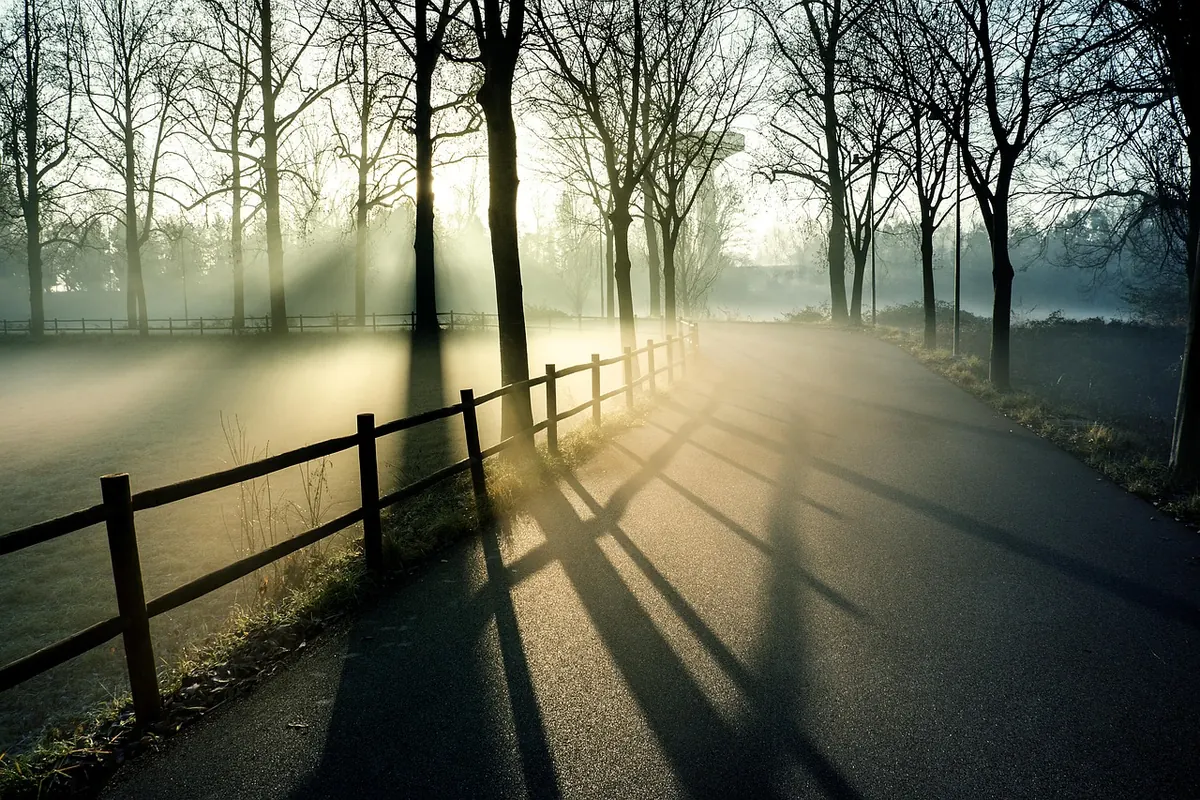
Photo: LUCA_Finardi / Pixabay